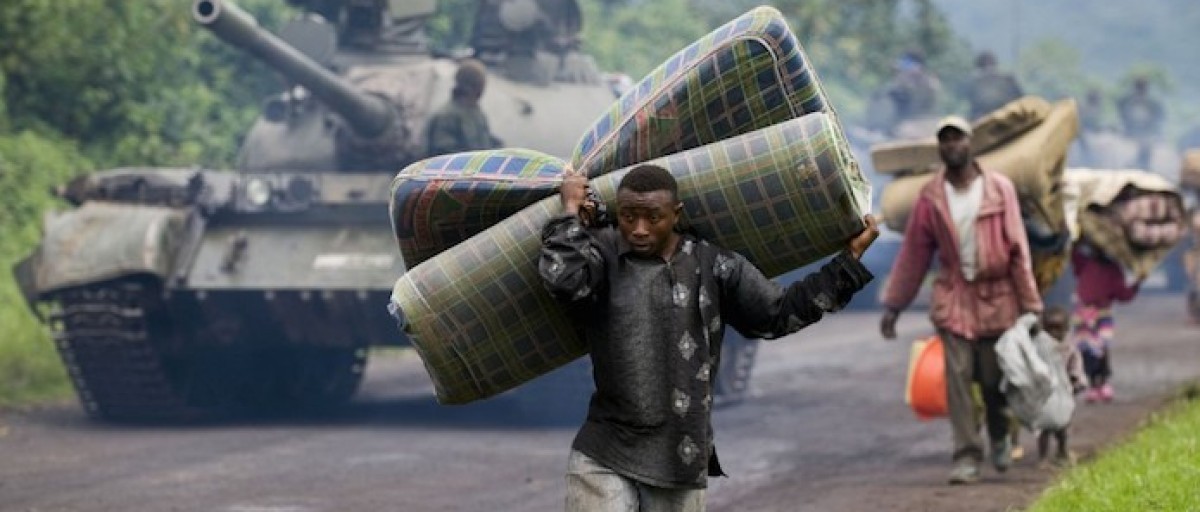
These have been raging for centuries but they intensified after the Independence struggles. Millions of Africans were displaced from their homes and millions lost their lives. The following are some of the major on-going conflicts all over the continent;
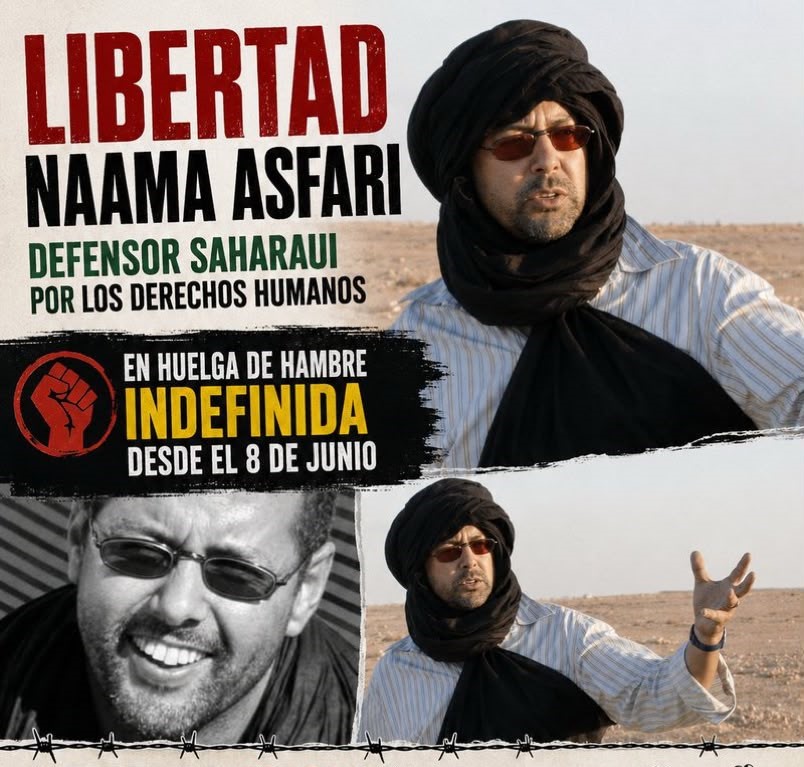
- 1970–present Western Sahara conflict
The question of Western Sahara remains one of Africa’s longest unresolved decolonization issues. For decades, the Sahrawi people have sought to exercise their internationally recognized right to self-determination and independence in accordance with international law and relevant United Nations resolutions. Many Sahrawis continue to live under difficult circumstances, with some residing in refugee camps while others advocate for their political, social, and human rights.
Western Sahara was administered by Spain from the late nineteenth century until 1975. During the wave of African decolonization, the United Nations repeatedly called upon Spain to organize a referendum allowing the Sahrawi people to decide their political future. In October 1975, the International Court of Justice concluded that while certain historical ties existed between tribes in the region and neighboring states, these ties did not amount to sovereignty and did not override the Sahrawi people’s right to self-determination. Despite this advisory opinion, Morocco organized the “Green March” in November 1975, during which approximately 350,000 Moroccan civilians, accompanied by military forces, entered Western Sahara. Spain subsequently withdrew from the territory, and Morocco assumed control over most of it, triggering a conflict with the Polisario Front, the Sahrawi national liberation movement.
One of the greatest humanitarian consequences of the conflict has been displacement. Today, approximately 165,000 Sahrawi refugees and their descendants continue to live in refugee camps around Tindouf, Algeria, where many families have spent nearly five decades awaiting a political solution. These camps have become symbols of resilience, but they also reflect the prolonged human cost of an unresolved conflict.
Human rights organizations and United Nations submissions have also documented allegations of enforced disappearances, arbitrary detention, torture, restrictions on freedom of expression, and political imprisonment. Reports submitted to the United Nations state that more than 1,000 Sahrawis were victims of enforced disappearance during the conflict, with hundreds still unaccounted for. Other Sahrawi human rights organizations have registered larger numbers of disappearance cases over the decades, illustrating the continuing challenge of documenting violations comprehensively.
- 1975–present Cabinda War
This is an ongoing separatist insurgency, waged by the Front for the Liberation of the Enclave of Cabinda (FLEC) against the government of Angola. FLEC aims at the restoration of the self-proclaimed Republic of Cabinda, located within the borders of the Cabinda province of Angola. About 30000 people killed and 25000 displaced.
- 1987–present Lord’s Resistance Army insurgency
This is an ongoing guerrilla campaign waged by the Lord’s Resistance Army (LRA) insurgent group since 1987. Currently there is low-level LRA activity in eastern DRC and CAR. The movement is led by Joseph Kony, who proclaims himself the “spokesperson” of God and a spirit medium.
It aims to establish a theocratic state based on the Commandments and Acholi tradition. The conflict, one of Africa’s longest running, has resulted in a humanitarian crisis. The LRA is accused of widespread human rights violations, including mutilation, torture, slavery, rape, the abduction of civilians, the use of child soldiers, and a number of massacres.[23] By 2004, the LRA had abducted more than 20,000 children, while 1.5 million civilians had been displaced and an estimated 100,000 civilians killed.
- 1991–present Somali Civil War
This is an ongoing civil war taking place in Somalia. It grew out of resistance to the military junta of Said Barre during the 1980s. By 1988–1990, the Somali Armed Forces began engaging various armed rebel groups,[18] including the Somali Salvation Democratic Front in the northeast,[19] the Somali National Movement in the northwest,[18] and the United Somali Congress in the south. The clan-based armed opposition groups overthrew the Barre government in 1991.
Various armed factions began competing for influence in the power vacuum and turmoil that followed, particularly in the south. In 1990–92, customary law temporarily collapsed due to the fighting. In the absence of a central government, Somalia became a “failed state“.[24] The UN withdrew in 1995, having incurred significant casualties; the UN-created police force collapsed.[22] After the central government’s collapse, there was some return to customary and religious law in most regions.[25] In 1991 and 1998, two autonomous regional governments were also established in the northern part of the country.[22]
In 2000, the Transitional National Government was established, followed by the Transitional Federal Government (TFG) in 2004. The trend toward reduced conflict halted in 2005, and sustained and destructive conflict took place in the south in 2005–07,[27] but the battle was of a much lower scale and intensity than in the early 1990s.[26] In 2006, Ethiopian troops seized most of the south from the newly formed Islamic Courts Union (ICU). The ICU then splintered into more radical groups, notably Al-Shabaab, which have since been fighting the Somali government and the AU-mandated AMISOM peacekeeping force for control of the country.
About 500,000 killed and 1.1 million people displaced.
- 1994–present Insurgency in Ogaden
This was an armed conflict that took place from 1994 to 2018. It was fought by separatists, the Ogaden National Liberation Front (ONLF), against the Ethiopian government. The war began in 1994, when the ONLF attempted to recreate Greater Somalia by unifying Ethiopia’s Somali Region with Somalia. It ended in a peace agreement as part of Prime Minister Abiy Ahmed‘s reforms. About 1300 people killed.
- 1995–present Second Afar insurgency
This is an insurgency in the Afar Region of Ethiopia and the Southern Red Sea Region of Eritrea (also known as Dankalia), waged by various Afar rebel groups. Both Ethiopia and Eritrea supported different rebel groups in the region in a proxy war, and occasionally engaged in border skirmishes with each other, as well as with opposing rebel groups.
- 1996–present Allied Democratic Forces insurgency
This is an ongoing conflict waged by the Allied Democratic Forces in Uganda and the Democratic Republic of the Congo, against the governments of those two countries. The insurgency began in 1995, intensifying in 2013, resulting in hundreds of deaths. The ADF is known to currently control a number of hidden camps which are home to about 2,000 people; in these camps, the ADF operates as proto-state with “an internal security service, a prison, health clinics, and an orphanage” as well as schools for boys and girls. About 3424 people were killed and about 150,000 displaced.
- Ituri conflict – 2003 to present
This is a major conflict between the agriculturalist Lendu and pastoralist Hema ethnic groups in the Ituri region of the north-eastern Democratic Republic of the Congo (DRC). While the two groups had fought since as early as 1972, the name ‘Ituri conflict’ refers to the period of intense violence between 1999 and 2003.[13] Armed conflict continues to the present day.
The conflict was largely set off by the Second Congo War, which had led to increased ethnic consciousness, a large supply of small arms, and the formation of various armed groups. More long-term factors include land disputes, natural resources, and the existing ethnic tensions throughout the region. The Lendu ethnicity was largely represented by the Nationalist and Integrationist Front (FNI) while the Union of Congolese Patriots (UPC) claimed to be fighting for the Hema.
The conflict was extremely violent. Large-scale massacres were perpetrated by members of both ethnic factions. The ongoing conflict, has led to more than 50,000 deaths, more than 500,000 displaced civilians and continuing, unacceptably high, mortality.
- 1997–present Islamic Terrorism in Egypt
Terrorism in Egypt includes targeting the Egyptian government officials, Egyptian police and Egyptian army members, tourists, Sufi Mosques and the Christian minority. Many attacks have been linked to Islamic extremism, and terrorism increased in the 1990s when the Islamist movement al-Gama’a al-Islamiyya targeted high-level political leaders and killed hundreds – including civilians – in its pursuit of implementing traditional Sharia law in Egypt.[1]
- 2002–present Islamic insurgency in the Maghreb
The Insurgency in the Maghreb refers to the Islamist insurgency in the Maghreb and Sahel regions of North Africa that followed on from the Algerian Civil War. The Algerian militant group Salafist Group for Preaching and Combat (GSPC) allied itself with al-Qaeda to eventually become al-Qaeda in the Islamic Maghreb (AQIM).[51] The Algerian and other Maghreb governments fighting the militants have worked with the United States and the United Kingdom since 2007, when Operation Enduring Freedom – Trans Sahara began.[13][52] While the 2011 Arab Spring affected support for the insurgency, it also presented military opportunities for the jihadists. In 2012, AQIM and Islamist allies captured the northern half of Mali, until being fought back less than a year later following a French-led foreign intervention, which was succeeded by the Sahel-wide Operation Barkhane. In Libya, the Islamic State of Iraq and the Levant (ISIL) has been able to control some limited territory in the ongoing civil war since 2014, amid allegations of local collaboration between the rival AQIM and ISIL
- 2002–present Operation Enduring Freedom – Horn of Africa
Operation Enduring Freedom – Horn of Africa (OEF-HOA) is a component of Operation Enduring Freedom (OEF). The Combined Joint Task Force – Horn of Africa (CJTF-HOA) is the primary (but not sole) military component assigned to accomplish the objectives of the mission. The naval component is the multinational Combined Task Force 150 (CTF-150) which operates under the direction of the United States Fifth Fleet. Both of these organizations have been historically part of United States Central Command. In February 2007, United States President George W. Bush announced the establishment of the United States Africa Command which took over all of the area of operations of CJTF-HOA in October 2008.[15][16]
CJTF-HOA consists of about 2,000 servicemen and women from the United States military and allied countries. The official area of responsibility comprises Sudan, Somalia, Djibouti, Ethiopia, Eritrea, Seychelles and Kenya. Outside this Combined Joint Operating Area, the CJTF-HOA has operations in Mauritius, Comoros, Liberia, Rwanda, Uganda and Tanzania.[17] The American contribution to the operation, aside from advisers, supplies, and other forms of non-combat support, consists mainly of drone strikes targeted at Al-Shabaab.[13] Other American combat operations include manned airstrikes, cruise missile strikes, and special forces raids.
- 2006–2009 Ethiopian War in Somalia
The Somalia War, also known as the Ethiopian invasion and occupation of Somalia was an armed conflict involving Ethiopian (ENDF) and Transitional Federal Government forces and Somali troops from Puntland against the Islamic Court Union, and militias affiliated to them for control of the Somalia. About 21320 people killed and 1.9 million people displaced.
- 2007–present Operation Enduring Freedom – Trans Sahara
Operation Juniper Shield, formerly known as Operation Enduring Freedom – Trans Sahara (OEF-TS), is the military operation conducted by the United States and partner nations in the Sahara/Sahel region of Africa, consisting of counterterrorism efforts and policing of arms and drug trafficking across central Africa. It is part of the Global War on Terrorism (GWOT). The other OEF mission in Africa is Operation Enduring Freedom – Horn of Africa (OEF-HOA).
The Congress approved $500 million for the Trans-Saharan Counterterrorism Initiative (TSCTI) over six years to support countries involved in counterterrorism against alleged threats of al-Qaeda operating in African countries, primarily Algeria, Chad, Mali, Mauritania, Niger, Senegal, Nigeria, and Morocco.[20] This program builds upon the former Pan Sahel Initiative (PSI), which concluded in December 2004[21] and focused on weapon and drug trafficking, as well as counterterrorism.[22] TSCTI has both military and non-military components to it. OEF-TS is the military component of the program. Civil affairs elements include USAID educational efforts, airport security, Department of the Treasury, and State Department efforts.[23]
Canada deployed teams of less than 15 CSOR members to Mali throughout 2011 to help combat militants in the Sahara.[2] Although the special forces will not engage in combat, they will train the Malian military in basic soldiering. Areas include communications, planning, first aid, and providing aid to the general populace.[2]
Operation Enduring Freedom Trans Sahara is primarily a training mission meant to equip 10 nations to combat insurgents in the region.[24] Africa Command states
- 2009–present Islamist civil war in Somalia
The 2009–present phase of the Somali Civil War is concentrated in southern and central Somalia and portions of north eastern Kenya. It began in early February 2009 with the conflict between the forces of the Federal Government of Somalia, assisted by African Union peacekeeping troops, and various militant groups and factions. The violence has displaced thousands of people in the southern part of the country. The conflict has also seen fighting between the Sufi Ahlu Sunna Waljama’a and Al-Shabaab.
About 4365 people killed and about 1.4 million displaced.
The 2009 Boko Haram uprising was a conflict between Boko Haram, a militant Islamist group, and Nigerian security forces. Violence across several states in northeastern Nigeria resulted in more than 1,000 dead, with around 700 killed in the city of Maiduguri alone, according to one military official A government inquiry later found that, while long-standing tensions existed between Boko Haram and the Nigerian Security forces, the immediate cause of the violence stemmed from a confrontation between a group of sect members and joint tax forces located at custom bridge Gamboru ward in the city of Maiduguri
- 2015–present ISIL insurgency in Tunisia
It refers to the ongoing militant and terror activity of the Islamic State of Iraq and the Levant branch in Tunisia. The activity of the Islamic State of Iraq and the Levant (ISIL) in Tunisia began in June 2015, with the Sousse attacks, though an earlier terror incident in Bardo Museum in March 2015 was claimed by ISIL, while the Tunisian government blamed Okba Ibn Nafaa Brigade for the attack. Following massive border clashes near Ben Guerdane in March 2016, the activity of the ISIL group was described as an armed insurgency,[25] switching from previous tactics of sporadic suicide attacks to attempts to gain territorial control.
- 2017–present Islamist insurgency in Mozambique
This is an ongoing conflict in Cabo Delgado Province, Mozambique, mainly fought between Islamist militants attempting to establish an Islamic state in the region, and Mozambican security forces. Civilians have been the main targets of attacks by Islamist militants.[19] The main insurgent faction is Ansar al-Sunna, a native extremist faction with tenuous international connections. From mid-2018, the Islamic State of Iraq and the Levant (ISIL) has allegedly become active in northern Mozambique as well,[4] and claimed its first attack against Mozambican security forces in June 2019. In addition, bandits have exploited the rebellion to carry out raids.[6] The insurgency is thought to be intensifying, as in the first half of 2020 there were nearly as many attacks carried out as in the whole of 2019.[20]
About 1100 people killed and over 300,000 people killed.
- 2002-2003 Conflict in the Pool Department
This was a military conflict between the government of the Republic of the Congo and the rebel Ninja militia which lasted from 2002 to 2003.[1] It began in March 2002, when clashes between Ninja militias and the government drove thousands of civilians from their homes.[1] In June, a battle in Brazzaville resulted in 100 people being killed.[1] On 12 March 2003, it was reported by the European Commission that the conflict had left 200,000 people “vulnerable and displaced”.[2] The conflict ended on 17 March 2003, when the government and the rebels signed a ceasefire.[3]
- 2003–present War in Darfur
The War in Darfur, also nicknamed the Land Cruiser War, is a major armed conflict in the Darfur region of Sudan that began in February 2003 when the Sudan Liberation Movement (SLM) and the Justice and Equality Movement (JEM) rebel groups began fighting the government of Sudan, which they accused of oppressing Darfur’s non-Arab population. The government responded to attacks by carrying out a campaign of ethnic cleansing against Darfur’s non-Arabs. This resulted in the death of hundreds of thousands of civilians.
One side of the conflict is mainly composed of the Sudanese military, police and the Janjaweed, a Sudanese militia group whose members are mostly recruited among Arabized indigenous Africans and a small number of Bedouin of the northern Rizeigat; the majority of other Arab groups in Darfur remained uninvolved. The other side is made up of rebel groups, notably the SLM/A and the JEM, recruited primarily from the non-Arab Muslim Fur, Zaghawa, and Masalit ethnic groups. Although the Sudanese government publicly denies that it supported the Janjaweed, evidence supports claims that it provided financial assistance and weapons and coordinated joint attacks, many against civilians. Estimates of the number of human casualties range up to several hundred thousand dead, from either combat or starvation and disease. Mass displacements and coercive migrations forced millions into refugee camps or across the border, creating a humanitarian crisis.
The August 2019 Draft Constitutional Declaration, signed by military and civilian representatives during the Sudanese Revolution, requires that a peace process leading to a peace agreement be made in Darfur and other regions of armed conflict in Sudan within the first six months of the 39-month transition period to democratic civilian government.[37][38]
. About 300000 people killed and 3.o million people killed.
- 2004–present Conflict in the Niger Delta
The current conflict first arose in the early 1990s over tensions between foreign oil corporations and a number of the Niger Delta‘s minority ethnic groups who feel they are being exploited, particularly the Ogoni and the Ijaw. Ethnic and political unrest continued throughout the 1990s despite the return to democracy [9] and the election of the Obasanjo government in 1999. Struggle for oil wealth has fueled violence between ethnic groups, causing the militarization of nearly the entire region by ethnic militia groups, Nigerian military and police forces, notably the Nigerian Mobile Police.[10] The violence has contributed to Nigeria’s ongoing energy supply crisis by discouraging foreign investment in new power generation plants in the region.
From 2004 on, violence also hit the oil industry with piracy and kidnappings. In 2009, a presidential amnesty program accompanied with support and training of ex-militants proved to be a success. Thus until 2011, victims of crimes were fearful of seeking justice for crimes committed against them because of a failure to prosecute those responsible for human rights abuses.[11]
- 2016–present Niger Delta conflict
This is an ongoing conflict around the Niger Delta region of Nigeria in a bid for the secession of the region, which was a part of the breakaway state of Biafra.[3] It follows on-and-off conflict in the Christian-dominated southern Niger Delta in the preceding years, as well as an insurgency in the Muslim-dominated northeast.
- 2004–present Kivu conflict
It began in 2004 in the eastern Congo as an armed conflict between the military of the Democratic Republic of the Congo (FARDC) and the Hutu Power group Democratic Forces for the Liberation of Rwanda (FDLR) in the Democratic Republic of the Congo. It has broadly consisted of three phases, the third of which is an ongoing conflict. Prior to March 2009, the main combatant group against the FARDC was the National Congress for the Defence of the People (CNDP). Following the cessation of hostilities between these two forces, rebel Tutsi forces, formerly under the command of Laurent Nkunda, became the dominant opposition to the government forces.
The peacekeeping force seeks to prevent escalation of force in the conflict, and minimise human rights abuses like sexual assault and the use of child soldiers.[27]
CNDP is sympathetic to the Banyamulenge in Eastern Congo, an ethnic Tutsi group, and to the Tutsi-dominated government of neighboring Rwanda. It was opposed by the Democratic Forces for the Liberation of Rwanda (FDLR), by the DRC army, and by United Nations forces. About 11873 people killed and 1.4 million displaced.
- 2005–2008 Mount Elgon insurgency
This was a conflict that started in 2005 when the Sabaot Land Defence Force militia revolted in the Mount Elgon area, Western Kenya. In the 1920s and the 1930s, British Kenya has displaced many native Sabaots in the modern-day Trans-Nzoia County. Most of their arable lands were given to new settlers, who became farmers in the area.[4] The Kenyan Government gave later in the 1960s a 7,700-hectare (19,000-acre) amount of land to landless families after its independence in 1963 from the UK. About 600 people were killed and 45000 displaced.
- 2006-2013 Bakassi conflict
This is an ongoing insurgency which started in 2006, in the Bakassi Peninsula of Cameroon waged by local separatists against Cameroonian government forces. After the independence of both Cameroon and Nigeria the border between them was not settled and there were other disputes. The Nigerian government claimed the border was that prior to the British–German agreements in 1913. On the other hand, Cameroon claimed the border laid down by the British–German agreements. The border dispute worsened in the 1980s and 1990s after some border incidents occurred, which almost caused a war between the two countries.
In 1994 Cameroon went to the International Court of Justice (ICJ) to avoid war with Nigeria after many armed clashes occurred in the disputed regions. Eight years later the ICJ ruled in Cameroon’s favour and confirmed the 1913 border made by the British and Germans as the international border between the two countries. Nigeria confirmed it would transfer Bakassi to Cameroon.
In June 2006 Nigeria signed the Greentree Agreement, which marked the formal transfer of authority in the region, and the Nigerian Army partly withdrew from Bakassi. The move was opposed by many Bakassians who considered themselves Nigerians and they started to arm themselves on 2 July 2006. Two years later the Nigerian Army fully withdrew from the peninsula and it transitioned to Cameroonian control. More than 50 people were killed between the start of the conflict and the full withdrawal of the Nigerians. The conflict largely ended on 25 September 2009 with an amnesty deal. Only the group, the Bakassi Freedom Fighters (BFF) and militants from the Niger Delta continue to fight. Since then sporadic clashes have occurred in Bakassi
- 2007–2009 Second Tuareg Rebellion
This was an insurgency that began in February 2007 amongst elements of the Tuareg people living in the Sahara desert regions of northern Mali and Niger. It is one of a series of insurgencies by formerly nomadic Tuareg populations, which had last appeared in the mid-1990s, and date back at least to 1916. Populations dispersed to Algeria and Libya, as well as to the south of Niger and Mali in the 1990s returned only in the late 1990s. Former fighters were to be integrated into national militaries, but the process has been slow and caused increased resentment. Malian Tuaregs had conducted some raids in 2005–2006, which ended in a renewed peace agreement. Fighting in both nations was carried on largely in parallel, but not in concert. While fighting was mostly confined to guerrilla attacks and army counterattacks, large portions of the desert north of each nation were no-go zones for the military and civilians fled to regional capitals like Kidal, Mali and Agadez, Niger. Niger saw heavy fighting and disruption of Uranium production in the mountainous north, before a Libyan backed peace deal, aided by a factional split among the rebels, brought a negotiated ceasefire and amnesty in May 2009.
The invasion of Anjouan (code-named Operation Democracy in Comoros),[5][6] on 25 March 2008, was an amphibious assault led by the Comoros, backed by African Union (AU) forces, including troops from Sudan, Tanzania, Senegal, along with logistical support from Libya and France. The objective of the invasion was to topple Colonel Mohamed Bacar‘s leadership in Anjouan, an island in the Union of Comoros, when he refused to step down after a disputed 2007 election, in defiance of the federal government and the AU. The Comoros archipelago in the Indian Ocean has had a fractious history since independence from France in 1975, experiencing more than 20 coups or attempted coups.[7]
This was between the forces of Djibouti and Eritrea and occurred between June 10 and June 13, 2008.[a] It was triggered by tension which began on April 16, 2008, when Djibouti reported that Eritrean armed forces had penetrated into Djibouti and dug trenches on both sides of the border.[5] The crisis deepened when armed clashes broke out between the two armed forces in the border area on June 10, 2008.[6] During the conflict, France provided logistical, medical and intelligence support to Djibouti, but did not participate in direct combat.[7]
- 2009–present Sudanese nomadic conflicts
These are non-state conflicts between rival nomadic tribes taking place in the territory of Sudan and, since 2011, South Sudan.[3] Conflict between nomadic tribes in Sudan is common, with fights breaking out over scarce resources, including grazing land, cattle and drinking water. Some of the tribes involved in these clashes have been the Messiria, Maalia, Rizeigat and Bani Hussein Arabic tribes inhabiting Darfur and West Kordofan, and the Dinka, Nuer and Murle African ethnic groups inhabiting South Sudan. Conflicts have been fueled by other major wars taking place in the same regions, in particular the Second Sudanese Civil War, the War in Darfur and the Sudanese conflict in South Kordofan and Blue Nile.
Over the years, clashes between rival ethnic militias have resulted in a large number of casualties and displaced over 100,000 people
- 2011–present Ethnic violence in South Sudan
This has a long history among South Sudan‘s varied ethnic groups. South Sudan has 64 tribes[1] with the largest being the Dinkas, who constitute about 35% of the population[2] and predominate in government. The second largest are the Nuers. Conflict is often aggravated among nomadic groups over the issue of cattle and grazing land and is part of the wider Sudanese nomadic conflicts.
- 2013–present South Sudanese Civil War
This is (15 December 2013 – 22 February 2020) a conflict in South Sudan between forces of the government and opposition forces. In December 2013, President Kiir accused his former deputy Riek Machar and ten others of attempting a coup d’état.[53][54] Machar denied trying to start a coup and fled to lead the SPLM – in opposition (SPLM-IO).[55] Fighting broke out between the Sudan People’s Liberation Movement (SPLM) and SPLM-IO, igniting the civil war. Ugandan troops were deployed to fight alongside the South Sudanese government.[56] The United Nations has peacekeepers in the country as part of the United Nations Mission in South Sudan (UNMISS). The conflict entailed tribal conflicts i.e between the Dinka and Nuer. About 400,0000 people are dead, 1.5 million refugees in neighboring countries and 2.1 million internally displaced.
In January and February 2009, there was a series of two air strikes in Sudan and one in the Red Sea, allegedly conducted by Israel against Iranian arms being smuggled to the Gaza Strip through Sudan.[1][2] The Israeli government hinted that Israeli forces were involved in the incident. The Israelis boasted over the ability to attack anywhere in the world irrespective of the breach of territorial sovereignty. about 200 people were killed.
- 2009 Dongo conflict
This was a minor conflict centered in the town of Dongo, on the left bank of the Ubangi River in Sud-Ubangi District, Democratic Republic of the Congo. Violence initially broke out in late October 2009 after a local dispute over fishing rights. This destabilized the region and led to a spiral of violence, and an exodus of civilians attempting to flee from the fighting. By December 2009, this conflict was one of the biggest conflicts of the United Nations Mission in the Democratic Republic of Congo (MONUC) and the United Nations; more than 168,000 people had fled their homes, many of them crossing into the neighboring Republic of the Congo. An intervention by the Congolese army and MONUC brought the conflict to an end by 13 December 2009.
This was an armed conflict from February to October 2011 in Libya fought between forces loyal to Colonel Muammar Gaddafi and foreign supported groups seeking to oust his government.[47][48] It erupted with the Libyan Revolution,[49] also known as the 17 February Revolution.[50] The war was preceded by protests in Zawiya on 8 August 2009 and finally ignited by protests in Benghazi beginning on Tuesday, 15 February 2011, which led to clashes with security forces that fired on the crowd.[51] The protests escalated into a rebellion that spread across the country,[52] with the forces opposing Gaddafi establishing an interim governing body called The National Transition Council. NATO provided logistical and air support to the rebels in order to oust Gadhafi.
- 2011–present Sudanese conflict in South Kordofan and Blue Nile
The is an armed conflict in the Sudanese southern states of South Kordofan and Blue Nile between the Sudanese Army (SAF) and Sudan People’s Liberation Movement-North (SPLM-N), a northern affiliate of the Sudan People’s Liberation Movement (SPLM) in South Sudan. After some years of relative calm following the 2005 agreement which ended the second Sudanese civil war between the Sudanese government and SPLM rebels, fighting broke out again in the lead-up to South Sudan independence on 9 July 2011, starting in South Kordofan on 5 June and spreading to the neighboring Blue Nile state in September. SPLM-N, splitting from newly independent SPLM, took up arms against the inclusion of the two southern states in Sudan with no popular consultation and against the lack of democratic elections.[18] The conflict is intertwined with the War in Darfur, since in November 2011 SPLM-N established a loose alliance with Darfuri rebels, called Sudan Revolutionary Front (SRF).[19]
About 2.32 million people have been affected by the conflict, with more than 500,000 having been displaced
An agreement was reached between the transitional government and the SPLM-North al-Hilu rebel faction on 3 September 2020 in Addis Ababa to separate religion and state and not discriminate against anyone’s ethnicity in order to secure the equal treatment of all citizens of Sudan. The declaration of principles stated that ‘Sudan is a multi-racial, multi-ethnic, multi-religious and multi-cultural society. Full recognition and accommodation of these diversities must be affirmed. (…) The state shall not establish an official religion. No citizen shall be discriminated against based on their religion.’[28]
- 2011-2014 Factional violence in Libya
Since the end of the 2011 Libyan Civil War, which overthrew Muammar Gaddafi, there was violence involving various militias and the new state security forces. The violence escalated into the War. The militias included guerrillas, Islamists, and militias who fought against Gaddafi but refused to lay down their arms when the war ended in October 2011. According to some civilian leaders, these latter militias shifted from merely delaying the surrender of their weapons to actively asserting a continuing political role as “guardians of the revolution”. Some of the largest, and most well-equipped militias are associated with Islamist groups now forming political parties.[17] Before the official end of hostilities between loyalist and opposition forces, there were reports of sporadic clashes between rival militias, and vigilante revenge killings. Libyan National Army under General Haftar, Gadhafi Loyalists and Shura Council of Benghazi Revolutionaries engaged in factional conflicts for control of Libya. Over 2000 people were killed.
- 2012–present Mali War
This is an ongoing armed political, ethnic and cultural conflict that started in January 2012 between the northern and southern parts of Mali in Africa. On 16 January 2012, several insurgent groups consisting of mainly the Tuaregs and Arab nomads began fighting a campaign against the Malian government for independence or greater autonomy for northern Mali, which they called Azawad. The National Movement for the Liberation of Azawad (MNLA), an organization fighting to make this area of Mali an independent homeland for the Tuareg people, had taken control of the region by April 2012. The Malian government is supported by many countries including France, USA, Burundi, Egypt, Rwanda etc. the MNLA is supported by militia groups. About 144000 have become refuged and 230000 internally displaced.
- 2012 Heglig Crisis
This was a brief war fought between the countries of Sudan and South Sudan in 2012 over oil-rich regions between South Sudan’s Unity and Sudan’s South Kordofan states. South Sudan invaded and briefly occupied the small border town of Heglig before being pushed back by the Sudanese army. Small-scale clashes continued until an agreement on borders and natural resources was signed on 26 September, resolving most aspects of the conflict. Both nations lost many soldiers including 29 civilians.
- 2012-2013 M23 rebellion
This was fighting in North Kivu, Democratic Republic of the Congo that occurred between the March 23 Movement and government forces. The rebellion was part of continued fighting in the region after the formal end of the Second Congo War in 2003. It broke out in 2012 and continued into 2013, when a peace agreement was made among eleven African nations, and the M23 troops surrendered in Uganda. The conflict was due to the victory of Joseph Kabila in the election. Over 283 people were killed and about 140000 people displaced.
- 2012 Baragoi clashes
These were tribal conflicts over cattle between the Samburu and Turkana people of Kenyan Samburu county. About 46 people were killed.
- 2012–present Central African Republic Civil War
This is an ongoing political and cultural civil war since 2012 in the Central African Republic involving the government, rebels from the Séléka coalition, and anti-balaka militias. In the preceding Bush War (2004–2007), the government of President François Bozizé fought with rebels until a peace agreement in 2007. The current conflict arose when a new coalition of varied rebel groups, known as Séléka,[26] accused the government of failing to abide by the peace agreements. The CAR government is supported by many countries including South Africa, France. Over 6000 people have been killed, 700000 internally displaced and 288000 are refuges.
- 2013–present Batwa–Luba clashes
These are a series of ongoing clashes in the Tanganyika area of Democratic Republic of the Congo (DRC) between the Pygmy Batwa people,[a] and the Luba people starting in 2013 until now. Pygmy Batwa are allegedly enslaved by the Luba and other Bantu ethnic groups thus rose up into militias, such as the “Perci” militia, and attacked Luba villages.[6] A Luba militia known as “Elements” attacked back, notably killing at least 30 people in the “Vumilia 1” displaced people camp in April 2015. Since the start of the conflict, hundreds have been killed and tens of thousands have been displaced from their homes.[1] The weapons used in the conflict are often arrows, axes, and machetes, rather than guns.[6][7]
In October 2015, Pygmy and Luba leaders sign a peace deal to end the conflict
- 2013-2019 RENAMO insurgency
This was a political guerrilla campaign by militants of the RENAMO party in Mozambique. The Resistência Nacional Moçambicana (RENAMO) was formed in 1976 following Mozambican independence from Portugal and incorporated a number of diverse recruits brought together by their opposition to the country’s new Marxist FRELIMO government, including disgruntled former colonial troops and deserters from the post-independence army and security forces The insurgency is widely considered to be an aftershock of the Mozambican Civil War; it resulted in renewed tensions between RENAMO and Mozambique’s ruling FRELIMO coalition over charges of state corruption and the disputed results of 2014 general elections.[6][7]
A ceasefire was announced between the government and the rebels in September 2014. However renewed tensions sparked violence in mid-2015.
On August 1, 2019, President Filipe Nyusi and RENAMO leader Ossufo Momade signed a peace agreement at RENAMO’s remote military base in the Gorongosa mountains which brought an end to hostilities.[1][8] The last remaining RENAMO fighters afterwards surrendered their weapons.[2] Another peace agreement was then signed by Nyusi and Momade in Maputo’s Peace Square on August 6, 2019.
Over 200 people were killed nad about 15000 displaced
These were a series of clashes in April 2014,east of Egypt’s southern city of Aswan between two local ethnic tribes: the Arab Al-Halayel (Beni Helal) clan and the Nubian Al-Dabodeya family. Shootings and stabbing occurred throughout the city Cars were torched and homes were looted and burned down.[3][4] The army had intervened to contain the crisis following a call by Aswan’s governor.[2] Vendetta killings are very common in Upper Egypt and can last across generations, but this recent outbreak of feudal violence was described by the police as “the worst in recent memory”, threatening to turn into a wide-scale ethnic conflict. About 25 people were killed and about 50 injured
- 2014–2020 Second Libyan Civil War
This is a both political and cultural conflict between the different political and cultural factions seeking control of Libya i.e. The House of Representatives and the Libyan National Army on one side, the Government of National Accord, the National Salvation Government and Islamic State of Iraq and the Levant. Each of the sides is backed by several militias and countries that have personal interests in Libya. The LNA is backed by Egypt, Qatar, Sudan, Turkey, UAE, Wagner group. The GNC is backed by Italy, France, USA. ISIL is backed Al-Qaeda in the Islamic Maghreb. The conflict broke out after the 2014 election, in which the GNC initially accepted the results but rejected them after the Supreme Constitutional Court nullified an amendment regarding the roadmap for Libya’s transition and HoR elections. Over 8778 people have been killed and over 20000 people injured.
- 2016–present Kamwina Nsapu rebellion
A majorly ethnic and political conflict between the Democratic Republic of Congo and the Luba and Lulua ethnic group since 2016. The Luba claim that state forces are illegally occupying their area. Over 5000 people have been killed, 1.09 million people internally displaced and over 35000 people displaced to Angola. There has been reports of ethnic cleansing between the faction of Luba and Lulua and the other group of Pende and Chokwe people.
- 2017–present Anglophone Crisis
The Anglophone crisis also known as the Cameroonian Civil War is a conflict since 2017 in which separatists want to declare Southern Cameroon an independent nation. Approximately 3000 people have been killed and more 679,000 internally displaced and
51,000 refugees in Nigeria